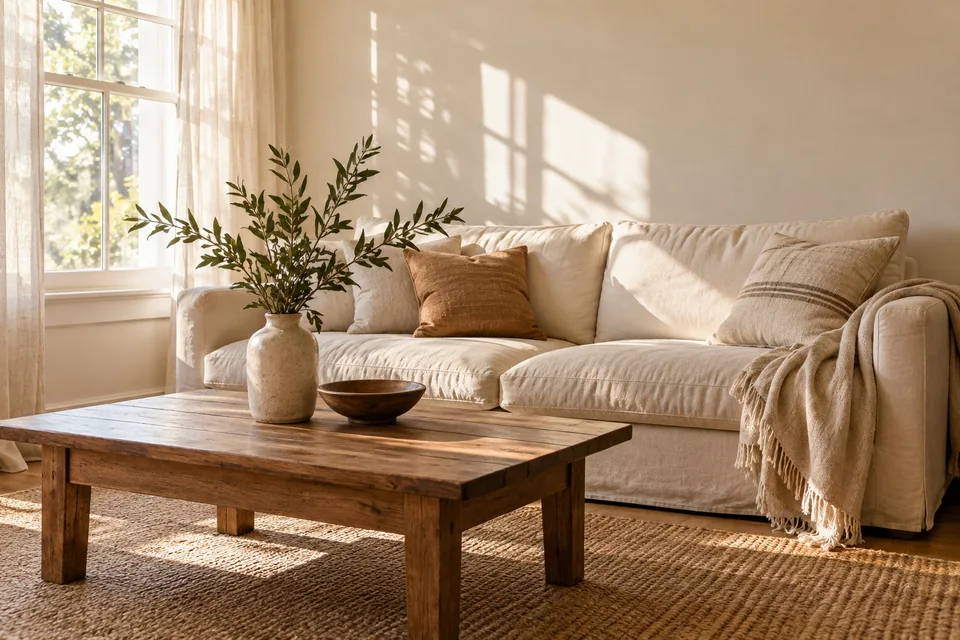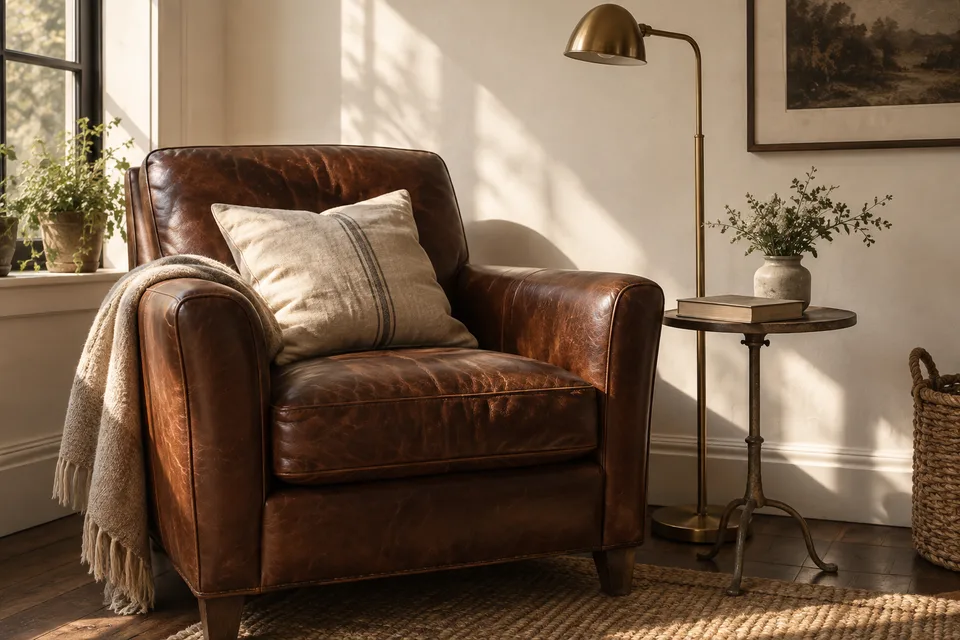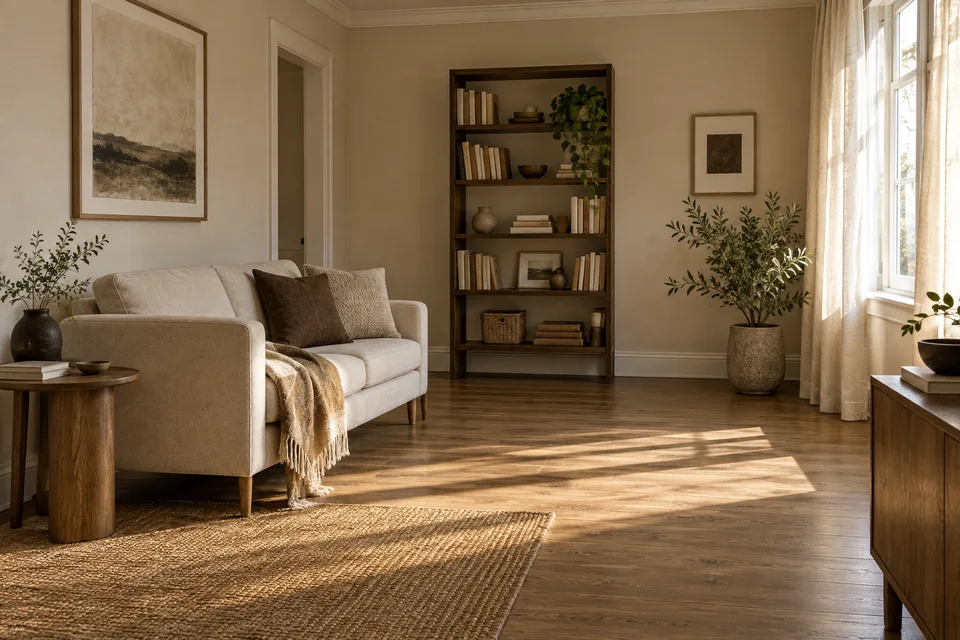
Start by clearing a walking route, putting useful surfaces within reach, and reducing clutter in one visual area. Test the arrangement before buying furniture.
Small rooms ask furniture to do several jobs. A sofa may be a reading place, a conversation spot, and the seat nearest a laptop. A coffee table may hold dinner for one person and a puzzle the next day. Before replacing anything, notice which of those jobs your room already does well.
This reset begins with movement and use. It is possible to improve a room without adding a new object, and it is easier to choose the right object after you know what is missing.
Clear the route you use every day
Walk into the room carrying a bag, then walk to the place where you usually sit. Notice what you step around. Move lightweight obstacles out of the route, keeping doors and exits clear.
Do not move heavy furniture alone or drag it across a surface that could be damaged. Measure first and get appropriate help. If a piece is anchored, do not remove the anchor without a safe plan for the new position.
Bring a useful surface closer
A beautiful side table is not useful if you have to lean awkwardly to reach it. Try moving an existing table closer to the seat you use most. Check that it remains stable and does not create a trip hazard.
If the only available surface is crowded, remove decorative items temporarily. Live with the clearer version for a day. You may discover that the room needed a place for a mug more than it needed another accessory.
Reduce one competing focal point
Look at the room from the doorway. If every shelf, wall, and surface is full, choose one area to simplify. Keep the objects you most enjoy and move the rest to temporary storage while you decide.
This is an experiment, not a demand to become a minimalist. A collection can stay; giving it a clearer boundary may be enough. Grouping small items on one shelf can help the rest of the room feel less visually busy.
Test a furniture footprint
Before buying, measure the proposed piece and mark its footprint with removable tape suitable for your floor. Include the room needed to open drawers or pull out a chair. Walk around it during normal activities.
Measure the delivery route too: doorways, corners, stairs, and lifts where relevant. A product photograph cannot tell you whether a piece will fit through your front door. Check the retailer’s dimensions and return terms before ordering.
Use light where you need it
A room can feel more comfortable when light reaches the place where you read or work. Reposition an existing lamp if it is safe to do so, keeping cables out of walkways and following the fixture’s instructions.
Avoid deciding everything under one lighting condition. Look at the arrangement in daylight and after dark. A corner that feels lovely in the afternoon may need a practical adjustment in the evening.
Wait before filling the gap
Leave the new arrangement in place for several ordinary days. Write down what still feels inconvenient. If there is a persistent need, buy for that need with measurements in hand. For the next layer of personality, read about a home that feels collected.
A few good questions
Where should I begin in a small living room?
Begin with the route people use most often. Keep doors, exits, and everyday paths clear, then arrange seating around the way you use the room.
Do small rooms need only small furniture?
No. A few appropriately sized pieces may work better than many tiny ones. Measure the space and test the footprint before buying.
Published and reviewed October 6, 2026. Editorial disclosure.