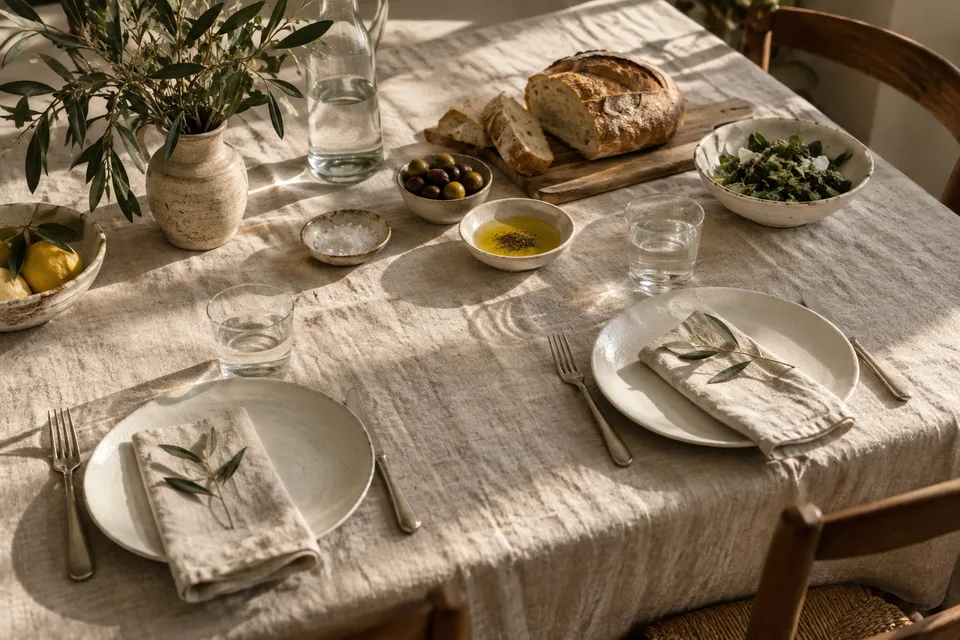
Build a small gathering around a familiar meal, a short preparation list, and a clear place for guests to settle. Leave room in the plan for conversation.
A small gathering does not have to look like a special event to feel like one. A familiar meal, somewhere comfortable to sit, and a host who has time to join the conversation are a strong foundation. The aim is to make the evening possible, including for you.
Begin with the kind of gathering you want. Coffee and something bought from a bakery can be a complete invitation. So can soup and bread, or a simple meal shared at the kitchen table. Name the plan clearly so guests know what to expect.
Choose the familiar version
Use a main dish you have made before, or choose prepared food from a source you trust. A gathering is not the easiest moment to learn several new cooking techniques at once. If you want to try something new, let it be one manageable element.
Ask guests about dietary requirements and allergies before choosing the menu. Do not guess whether an ingredient or preparation method is suitable. Be clear about what you can provide and keep ingredient information available.
Give the menu a limit
Choose a main element, one supporting dish, and something to drink. Add more only if the group or occasion needs it. A larger menu can create competing cooking times and more dishes than your kitchen can comfortably hold.
Write down what must happen close to serving. If several tasks need your attention at the same moment, simplify. Follow applicable food-safety guidance for preparation, storage, reheating, and serving; this planning guide does not replace it.
Prepare the places people will use
Clear a spot for coats and bags. Check that seats are comfortable, the bathroom has the essentials, and the route between rooms is easy to use. These details matter more than styling every corner.
Set the table early if you can. Use the everyday table approach: useful items first, a low detail if you want one, and room for food. Keep spare water and serving utensils easy to reach.
Make a short arrival plan
Choose what guests can have while you finish the last task. It could be water, tea, or a simple snack suited to their needs. A prepared place to sit gives everyone a natural beginning.
If someone offers help, give them a specific, comfortable task such as placing napkins or carrying a bowl. Accepting help can be part of the gathering rather than evidence that the plan failed. Avoid assigning anything that requires knowledge they do not have.
Leave the room a little unfinished
Close the door on the room nobody needs to use. Put away the cleaning supplies. The goal is a welcoming, usable home, not a demonstration of how completely you can erase daily life.
Afterwards, note one thing that made hosting easier and one thing you could skip next time. A repeatable gathering becomes lighter through experience. Keep the parts that helped people settle in, and let the unnecessary production go.
A few good questions
How can I make hosting feel less stressful?
Choose a meal you already know, prepare what you safely can in advance, and reduce the number of dishes and decorative tasks.
What should I ask guests before planning food?
Ask about dietary requirements and allergies early, and be honest about ingredients and what you can safely accommodate.
Published and reviewed October 6, 2026. Editorial disclosure.